
Nashville / Office Plant Maintenance in Nashville, TN
Office plant maintenance for Nashville's heating season
Plants do not die in Nashville summers. They die in February. Ongoing care from a certified horticulture team, with proactive plant health monitoring and seasonal adjustments built around the way this climate actually behaves.
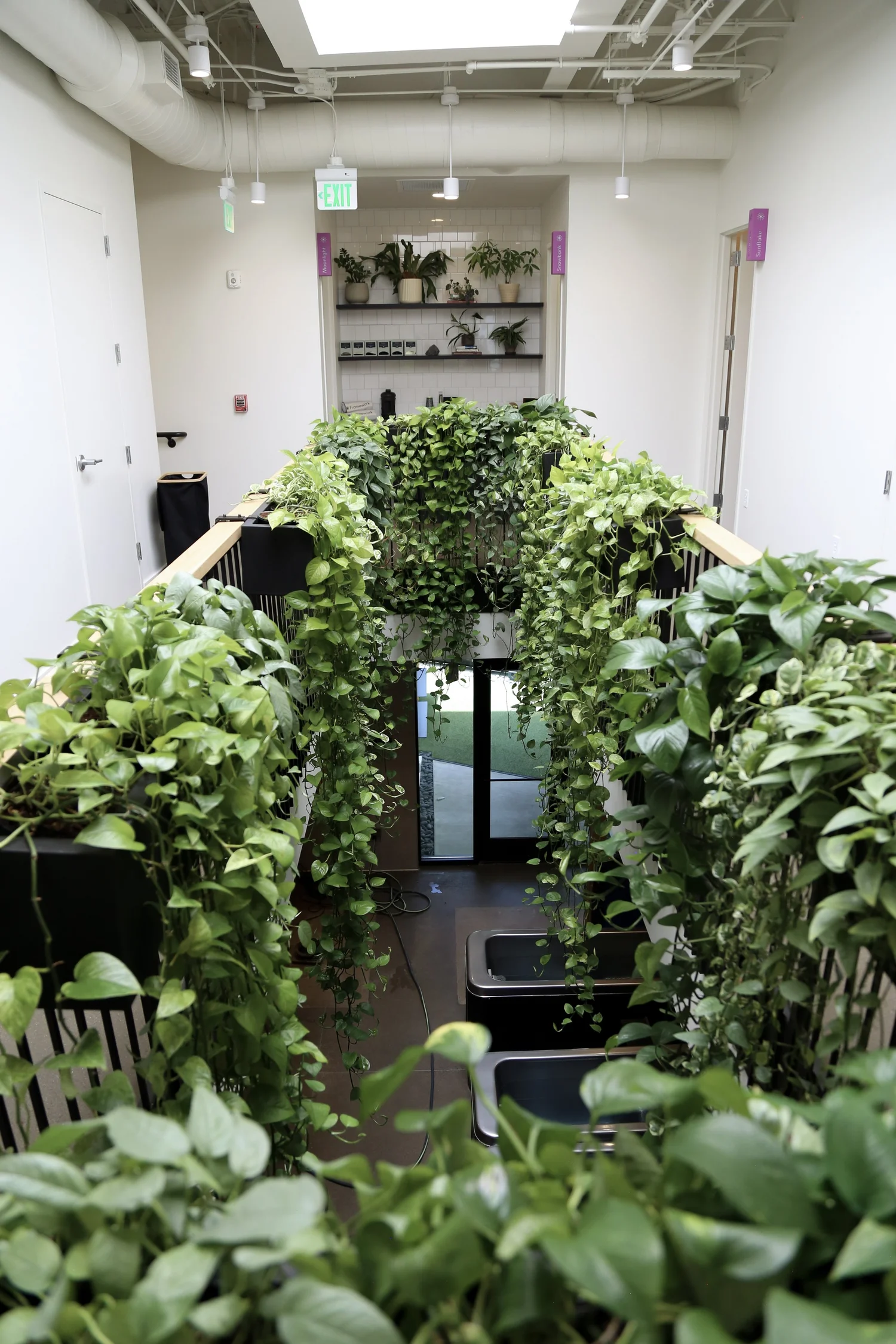
What the season does
Nashville runs about 3,861 heating degree days a year. Outdoor air that sits above eighty percent relative humidity most mornings arrives indoors, gets heated, and lands somewhere far drier than anything a tropical foliage plant evolved for.
Who does the work
Three credentials on a team of eight. Savannah Toal holds a Horticulture Certificate through NC State. Kelly Fletcher is an AmericanHort certified Greenhouse Technician and has completed the CPT-I plantscape technician certification. A third technician is working through NC State's program now.
What you get between visits
Maintenance clients get a personal client portal for service details, requests and direct communication with the team.
The problem is the heating season, not the plants
An office plant program that looks effortless in October starts failing in January, and the cause is almost never neglect. Nashville sits in a humid subtropical climate and then spends most of the winter heating that air indoors. Roughly 3,861 heating degree days a year is a lot of hours of a furnace running, and every one of them pulls moisture out of the room.
A plant does not register that as winter. It registers it as drought, and it responds by dropping leaves, browning tips, and becoming attractive to spider mites that only reproduce that fast in dry air. This is the single most common reason a Nashville office calls a plant company for the second time.
Fifteen steps, and every technician knows them
Most plant maintenance is somebody with a watering can and good intentions. Ours is a documented fifteen-step process every technician is required to know and follow at every account.
A visit starts with a scan of the space for the problems that are not about the plant — has something been moved into a vent's path, has the thermostat changed, what does the room look like as a whole. Then pruning: yellowing and browning foliage, runners, restaking, proactive thinning, cutting back balding vines to push bushy growth. Then a pest inspection under the leaves and in the soil, following the protocol for whatever is found.
Soil moisture is checked with a probe rather than by eye, because the top inch of a pot tells you almost nothing. Soil gets topped off where roots have surfaced or the medium has compacted. Leaves and pots are cleaned, and propagation vessels are scrubbed the moment algae appears — those stay crystal clear. Top dressing gets arranged, vines get trained, and every plant is rotated so its best side faces the room, because plants grow toward light and will slowly turn their back on your lobby if nobody moves them.
The visit ends with cleanup — water spots, overspray on glass and mirrors, spilled soil — then a walkthrough, photographs of every plant area, and notes uploaded to our system along with any replacement orders.
What happens when a plant fails anyway
Maintenance clients have a replacement guarantee on plants we installed. If something falls below our standard for a reason that was in our control — overwatering, pests, a specification that was wrong for the room — it is replaced at no cost. Terms apply, and we would rather explain them at the start than at the argument.
The gap between outside and inside is the whole job
Nashville's outdoor air sits around eighty-three percent relative humidity on an average morning and falls to somewhere near half that by mid-afternoon. Both those numbers get conditioned before they reach a plant. In July, when normal highs hit 90.9°F, the building is stripping moisture out to cool the air; in January, when the monthly mean is 39.6°F, it is stripping moisture out to heat it.
So the plant never experiences Nashville. It experiences whatever the building makes of Nashville, and that is a narrower, drier band than anything on the label. A maintenance program that adjusts seasonally is really tracking the building's behavior rather than the weather's.
On-site consultation
We walk the space, read the light, and talk through how the room gets used before anything is specified.
Custom plant design
Plant and vessel selection matched to your brand, your light, and the way the space needs to feel.
Delivery and install
Our team pots, places, and cleans up, and leaves care notes for anything you handle yourself.
Ongoing maintenance
Watering, fertilizing, pruning, rotation, and pest treatment on a set schedule, including swapping out anything that stops thriving.
How a project runs
01
Consultation on site
We come look at the space, take light readings, and scope it.
02
Design proposal
Plant and vessel selections with placements and a quote.
03
Install day
Sourced, potted, delivered, placed. Usually one visit.
04
Care route
Recurring maintenance visits on your schedule.
I never have to worry about under or over watering. They make sure everything stays healthy, dust the plants, and keep them looking beautiful and thriving year round.
Plant Savvy is the third vendor I have had at our hotel in three years, and Savannah and her team are the only vendor that truly saw our needs and put our ideas into action.
Frequently asked questions
How often do you visit?
Weekly or biweekly. Those are the two maintenance routes we run. Monthly visits can be scheduled but sit off-route — we stopped offering monthly as a program because plants were not being cared for in the three weeks between visits, and the results were not ones we wanted our name on.
What does maintenance actually include?
Consistent care, proactive plant health monitoring and seasonal adjustments — catching problems while they are small, and changing the program as the year turns.
Can you take over plants another company installed?
Yes. We assess what is there first, because inherited plantings usually contain two or three specimens in placements that were never going to work.
What happens if we want to manage it ourselves?
Then you get a complimentary two-week check-in after installation and a customized care guide for your specific plants and your specific room.
Start your project
Tell us about the space and we'll set up a time to come see it.
Ongoing plant care for Nashville offices by a certified horticulture team — proactive health monitoring, seasonal adjustments and a client portal.