
Nashville / Plant Service for Nashville Medical Offices
Medical office plants, and the guidance that governs them
Plant design and maintenance for Nashville medical offices and healthcare facilities — specified around infection control and corridor clearance, and maintained by staff who are not your clinical staff.
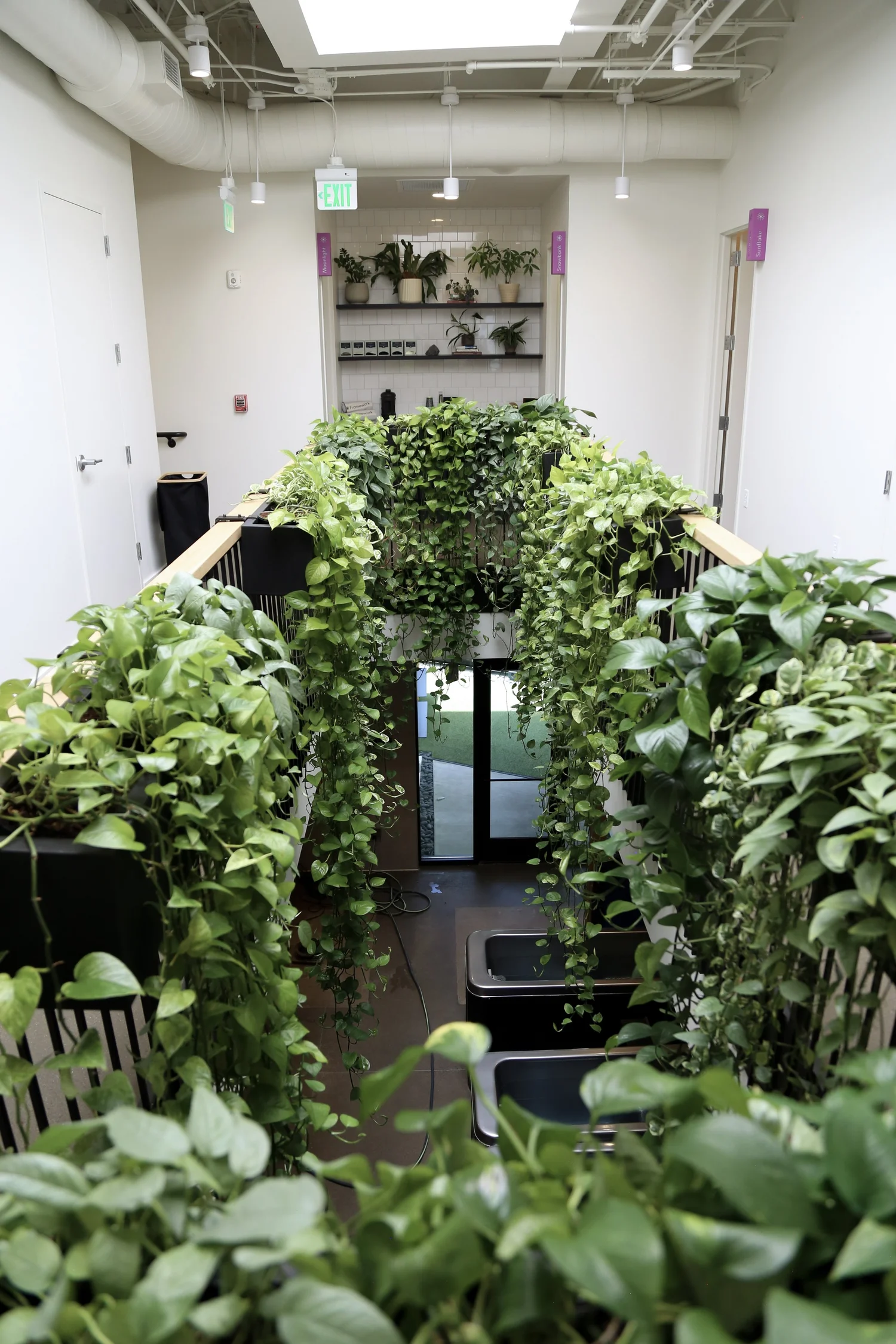
The federal guideline worth knowing
CDC's environmental infection control guidance says flowers and potted plants "need not be restricted from areas for immunocompetent patients," and directs facilities to "designate care and maintenance of flowers and potted plants to staff not directly involved with patient care."
And the hard line
The same guidance says not to allow fresh or dried flowers or potted plants in patient-care areas for immunosuppressed patients. CDC's isolation guideline separately prohibits them in the rooms of allogeneic transplant patients.
Where Nashville's medical offices cluster
Eight TriStar facilities sit within a few blocks of each other in the 37203 Midtown and Centennial corridor, from Patterson Street to Murphy Avenue.
Start with what the guidance actually says
CDC's Guidelines for Environmental Infection Control in Health-Care Facilities address plants directly, in four recommendations. Plants need not be restricted in areas for immunocompetent patients. Their care should be assigned to staff not directly involved in patient care. If clinical staff must handle them, gloves and hand hygiene afterward. And no fresh or dried flowers or potted plants in patient-care areas for immunosuppressed patients.
The reasoning is documented rather than precautionary. CDC records vase water carrying bacterial concentrations from ten thousand to ten billion colony-forming units per millilitre, most often *Pseudomonas aeruginosa*, and notes that flowers and ornamental plants may act as a reservoir for *Aspergillus* and *Fusarium* species. It also notes, for balance, that researchers found hospital flowers no more contaminated than flowers in restaurants or homes.
Read carefully, that is not an argument against plants in a medical building. It is an argument for sealed and sub-irrigated vessels, no standing water, and a maintenance program run by an outside team — which is close to a description of what the second recommendation asks for.
Corridors, and the specification nobody gives you
Where a planter can physically stand in a healthcare facility is governed by the Life Safety Code. CMS adopted the 2012 edition of NFPA 101 effective July 2016, and its guidance on section 18.2.3.4 requires hospital exit access corridors be eight feet clear.
Fixed furniture — the category a floor planter falls into — may project into that width only under five conditions together: the corridor is at least eight feet wide, the furniture does not reduce clear width below six feet, it is securely attached to the floor or wall, it sits on one side of the corridor only, groupings do not exceed fifty square feet, and groupings are separated by at least ten feet.
ADA adds its own limit anywhere in the building. An object whose leading edge sits between twenty-seven and eighty inches above the floor may protrude no more than four inches into a circulation path. A tall floor planter that breaks the twenty-seven-inch plane is the classic failure, and hanging material needs eighty inches of headroom.
Where the planting goes instead
Waiting rooms, reception, administrative offices, staff areas, lobbies and courtyards — the parts of a medical building where the guidance is permissive and the benefit to how the space feels is largest. Nashville has a great deal of this: the healthcare industry here generates $72.1 billion in annual economic benefit and supports more than 370,000 jobs, across more than 8,300 health care business locations in the region.
On-site consultation
We walk the space, read the light, and talk through how the room gets used before anything is specified.
Custom plant design
Plant and vessel selection matched to your brand, your light, and the way the space needs to feel.
Delivery and install
Our team pots, places, and cleans up, and leaves care notes for anything you handle yourself.
Ongoing maintenance
Watering, fertilizing, pruning, rotation, and pest treatment on a set schedule, including swapping out anything that stops thriving.
How a project runs
01
Consultation on site
We come look at the space, take light readings, and scope it.
02
Design proposal
Plant and vessel selections with placements and a quote.
03
Install day
Sourced, potted, delivered, placed. Usually one visit.
04
Care route
Recurring maintenance visits on your schedule.
Plant Savvy is the third vendor I have had at our hotel in three years, and Savannah and her team are the only vendor that truly saw our needs and put our ideas into action.
I never have to worry about under or over watering. They make sure everything stays healthy, dust the plants, and keep them looking beautiful and thriving year round.
Frequently asked questions
Are live plants allowed in a medical office at all?
Yes, in areas serving immunocompetent patients — CDC says explicitly they need not be restricted. The restriction applies to patient-care areas for immunosuppressed patients, and to transplant protective environments, where they are prohibited.
Who is supposed to look after them?
CDC directs that care be assigned to staff not directly involved in patient care. In practice that means an outside plant service or non-clinical facilities staff.
How far can a planter stick out into a corridor?
Under the Life Safety Code as CMS applies it, fixed furniture can project only if the corridor is at least eight feet wide, clear width never drops below six feet, the piece is secured, it is on one side only, groupings stay under fifty square feet and are ten feet apart. ADA separately caps protrusion at four inches for anything between twenty-seven and eighty inches high.
What about standing water in saucers?
We do not use them. Vase and saucer water is the specific documented reservoir in CDC's findings, and sub-irrigated or sealed vessels remove the issue.
Can you work in an occupied clinical building?
Yes, and scheduling is set with facilities rather than assumed. We carry general liability, commercial auto, workers compensation and umbrella coverage, so the certificate a facilities office asks for before a vendor works on site is not a delay.
What if the space has no usable light at all?
Then we light it. We installed custom grow lighting for HMC Civil Rights Law because the room could not support the design any other way. It is a real option rather than a last resort.
Start your project
Tell us about the space and we'll set up a time to come see it.
Plant programs for Nashville medical and healthcare offices, designed around CDC infection-control guidance and corridor clearance rules.