Nashville / Restaurant Plant Design in Nashville, TN
Restaurant plants that pass inspection
Interior and patio planting for Nashville restaurants, designed around the rules your inspector actually applies — and maintained so it never becomes the thing that costs you points.
Weekly
Or biweekly — the two routes we run
Every placement
Light measured at the plant, not at the window
One crew
Design, install, and ongoing care
Named work
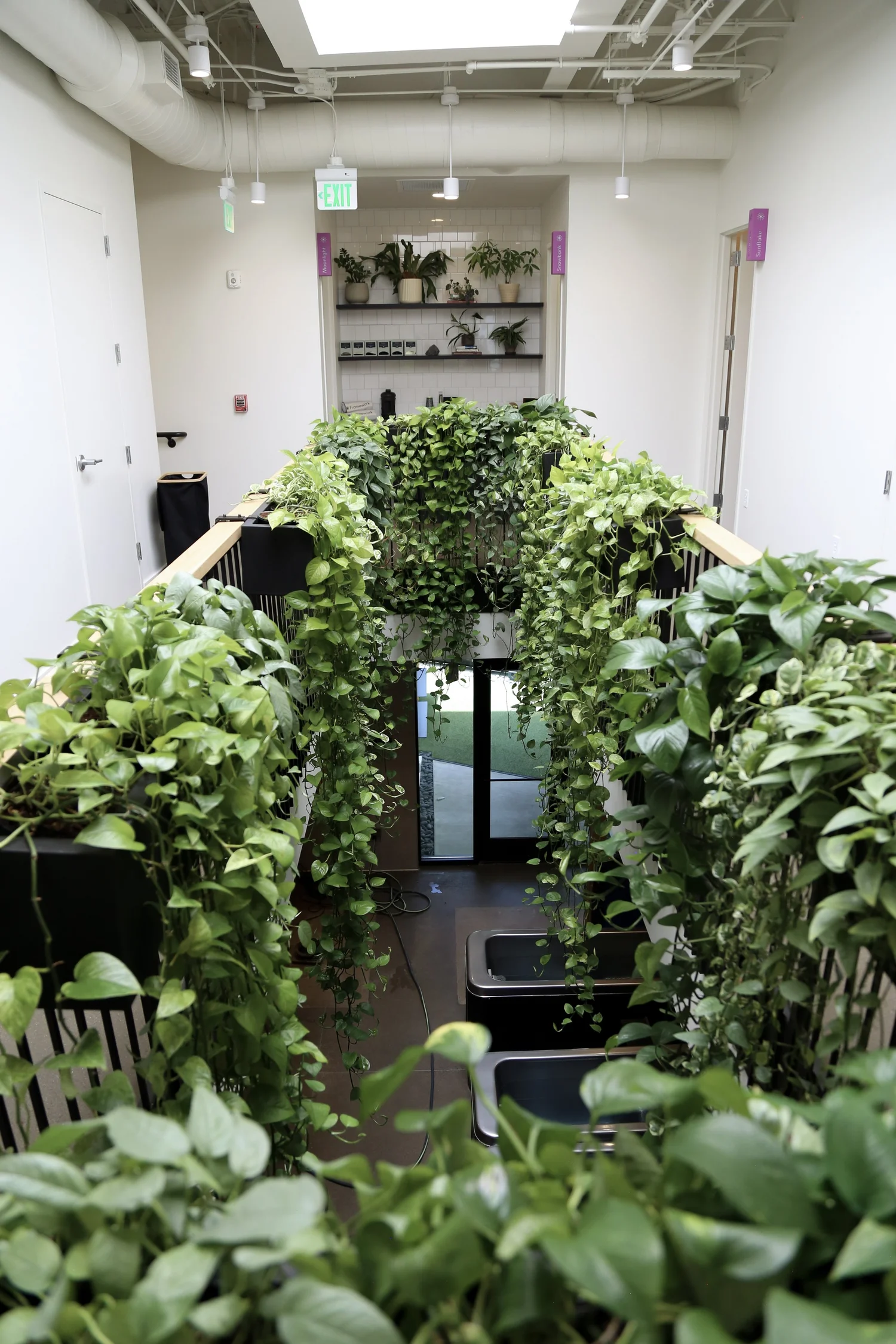
Ladybird Taco — all three locations, The Gulch, Inglewood and 12South. Full design, installation and maintenance, interiors and exteriors. OSA Coffee Roasters — a design addition plus a care and pest session to bring their existing collection back before new plants went in.
What the code actually says about plants
Nothing directly. There is no rule in Tennessee's food service code that mentions plants, planters or vegetation. What applies instead is indirect and worth knowing: the premises must be free of "items that are unnecessary to the operation," pest harborage must be eliminated, and surfaces must be smooth and easily cleanable.
How often you are looked at
Metro Public Health inspects food service establishments between one and three times a year depending on operating history, and inspected more than 7,000 establishments in 2024.
The honest version of the regulation question
Restaurant operators ask whether plants are allowed, and the accurate answer is that Tennessee's food service code — Rule Chapter 1200-23-01 — never mentions them. There is no permission and no prohibition.
What there is instead is three provisions an inspector can reasonably apply. Rule .06(5)(n) requires the premises be free of "items that are unnecessary to the operation or maintenance of the establishment." Rule .06(5)(k) requires routinely inspecting for evidence of pests and eliminating harborage conditions — which is where soil, standing water in a saucer and loose mulch live. And .06(2)(a)(1) requires interior surfaces be smooth and easily cleanable.
So the design question is not whether you can have plants. It is whether a given planting reads as considered and maintained, or as clutter with a pest problem in it. Sealed vessels, no standing water, no loose top-dressing near food handling, and a maintenance schedule that means somebody other than your kitchen staff is responsible for it.
Patios, and the one place Nashville names planters in writing
Metro Nashville's Parklet Program Manual is the only Nashville rulebook we have found that names planters directly, and it names them approvingly: a parklet "should have an edge to buffer the street," and planters are listed among the acceptable forms alongside railing and cabling.
The manual also constrains the design in ways worth knowing before you buy containers. Continuous opaque walls above thirty-six inches that block views into the parklet are prohibited. Loose particles such as sand or stone are not permitted on the parklet surface. Concrete elements must weigh less than two hundred pounds per square foot. And within the sight triangle nothing is permitted between two and a half and eight feet, except trees with clear trunks.
A sidewalk café is a different permit — Metro Code 13.32.165, administered by NDOT, $250 application plus an annual right-of-way fee scaled to size.
What we install and what we maintain
Interior planting designed for the dining room and the light it actually has, exterior containers for patios and entries, and ongoing maintenance with seasonal rotations, pruning, fertilization and plant health monitoring.
On-site consultation
We walk the space, read the light, and talk through how the room gets used before anything is specified.
Custom plant design
Plant and vessel selection matched to your brand, your light, and the way the space needs to feel.
Delivery and install
Our team pots, places, and cleans up, and leaves care notes for anything you handle yourself.
Ongoing maintenance
Watering, fertilizing, pruning, rotation, and pest treatment on a set schedule, including swapping out anything that stops thriving.
How a project runs
01
Consultation on site
We come look at the space, take light readings, and scope it.
02
Design proposal
Plant and vessel selections with placements and a quote.
03
Install day
Sourced, potted, delivered, placed. Usually one visit.
04
Care route
Recurring maintenance visits on your schedule.
I never have to worry about under or over watering. They make sure everything stays healthy, dust the plants, and keep them looking beautiful and thriving year round.
Plant Savvy is the third vendor I have had at our hotel in three years, and Savannah and her team are the only vendor that truly saw our needs and put our ideas into action.
Frequently asked questions
Will plants cost us points on an inspection?
Not on their own — the code does not mention them. What draws attention is standing water, soil where it should not be, and anything that reads as unnecessary clutter. All three are maintenance problems, which is what the program solves.
Can we put planters on the patio as a barrier?
On a parklet, yes — Metro's own manual lists planters as an acceptable street-edge buffer. Sidewalk cafés run under a separate permit, and we would want to see the approved footprint before specifying anything.
How close to food prep can a plant go?
We keep planting out of prep and warewashing areas entirely. The rules there require smooth, nonabsorbent, easily cleanable surfaces, and that is a fight not worth having.
Do you work around service?
Yes — restaurant maintenance is scheduled outside service hours as standard, on a weekly or biweekly route.
What if a plant dies on us?
Plants we installed, under a maintenance contract, are replaced at no cost when the cause was within our control. In a restaurant that usually means a placement that turned out to be wrong for the room, and it is our problem to fix.
Start your project
Tell us about the space and we'll set up a time to come see it.
Related pages
Plant design for Nashville restaurants and patios, specified around health inspections, pest harborage rules and Metro's parklet requirements.