
Nashville / Interior Plant Design & Maintenance in Franklin, TN
Franklin is two building stocks, and they need different plants
Interior and exterior plant programs for Franklin offices, restaurants and retail — designed for the building you actually occupy, whether that is an 1890s storefront on Main Street or a curtain-wall floor plate off Carothers Parkway.
Weekly
Or biweekly — the two routes we run
Every placement
Light measured at the plant, not at the window
One crew
Design, install, and ongoing care
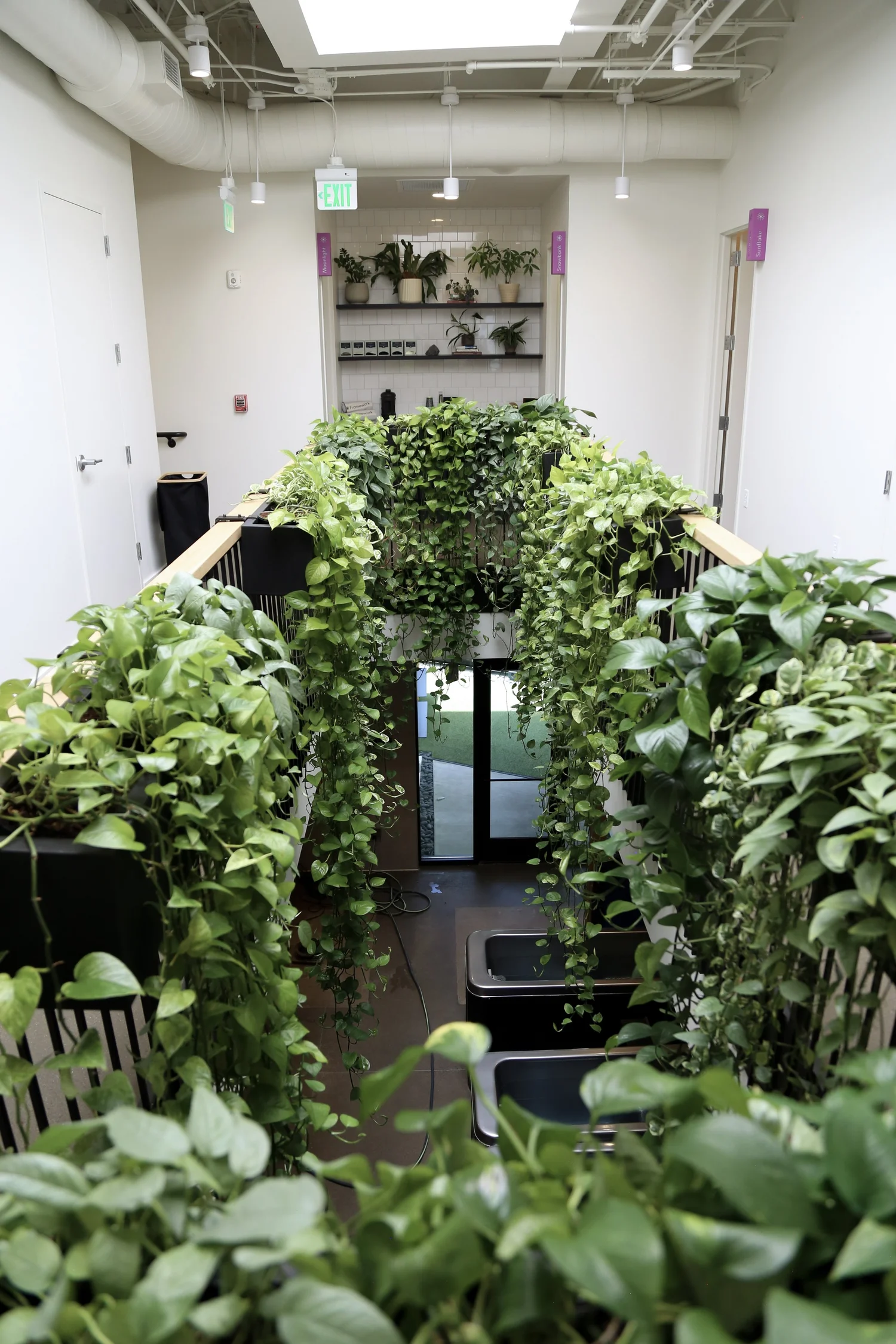
Named work here
The Factory at Franklin — full design and installation of more than four hundred plants across the 1929 stove works. Experity, an office in downtown Franklin.
The commercial market
Cool Springs and Franklin together hold 9.7 million square feet of office space, about nineteen percent of the entire Nashville office market, at 18.8% vacancy and $32.96 a foot — roughly four dollars below the metro average.
What makes this city unusual
Williamson County holds national or international headquarters for more than forty companies, and twelve of the twenty-five largest publicly traded companies in the Nashville region sit here.
One city, two completely different plant problems
The Franklin Historic District went on the National Register in July 1972 — around a hundred and forty acres and two hundred and eleven contributing buildings, expanded twice since. Downtown is Gothic Revival, Federal, Greek Revival, Italianate and Queen Anne, and it means small original window openings, deep interiors, and mechanical systems added a century after the walls.
Four miles away, Cool Springs did not exist before 1987. Its towers are steel frames with floor-to-ceiling glass curtain wall, floor plates between twenty-five and thirty thousand square feet, and — this is the part that catches people out — high performance glazing designed to reject solar heat. Nissan's headquarters uses low-emissivity windows with the building skin energy-modeled to limit heat gain. That glazing is doing its job, and one of the things it rejects is the light a plant was counting on.
So a specification that works on Main Street will not work off Carothers Parkway, and the reverse is worse. We measure light at each placement rather than assuming a bright building is a bright room.
What we have installed here
The Factory at Franklin is the largest single installation we have done — over four hundred plants through a complex of ten industrial buildings put up in 1929 for the Allen Manufacturing stove works, dormant for five years in the nineties, and now retail, restaurants and event venues. Design and installation only; the maintenance there is not ours. We also plant and maintain an office for Experity in downtown Franklin.
Working inside the historic district
If your space is in the Historic Preservation Overlay, exterior work needs a Certificate of Appropriateness from the Historic Zoning Commission — and that list explicitly includes fences, walls, sidewalks, walkways, parking areas and lighting. Signs and awning installation can be approved administratively by the Preservation Planner rather than going to the full commission.
Interior planting is not reviewed. Exterior containers on private property generally are not either, but anything that reads as a permanent site element is worth checking before it is bought rather than after.
On-site consultation
We walk the space, read the light, and talk through how the room gets used before anything is specified.
Custom plant design
Plant and vessel selection matched to your brand, your light, and the way the space needs to feel.
Delivery and install
Our team pots, places, and cleans up, and leaves care notes for anything you handle yourself.
Ongoing maintenance
Watering, fertilizing, pruning, rotation, and pest treatment on a set schedule, including swapping out anything that stops thriving.
How a project runs
01
Consultation on site
We come look at the space, take light readings, and scope it.
02
Design proposal
Plant and vessel selections with placements and a quote.
03
Install day
Sourced, potted, delivered, placed. Usually one visit.
04
Care route
Recurring maintenance visits on your schedule.
I never have to worry about under or over watering. They make sure everything stays healthy, dust the plants, and keep them looking beautiful and thriving year round.
Plant Savvy is the third vendor I have had at our hotel in three years, and Savannah and her team are the only vendor that truly saw our needs and put our ideas into action.
Frequently asked questions
Do you actually work in Franklin, or just cover it?
We work here. The Factory and Experity are both Franklin projects, and Franklin sits on our regular route.
Our Cool Springs floor has glass on three sides. Why are the plants still failing?
Almost certainly the glazing. Class A buildings here use high-performance low-emissivity glass, which cuts the light reaching a plant far more than the view suggests. A reading at the placement usually comes back at a fraction of what people expect, and the fix is a different plant list rather than a bigger window.
We are in a historic building downtown. Is planting going to be a problem?
Not inside. The Historic Zoning Commission reviews exterior work — and does not review interiors at all. What we do check is access, because a nineteenth-century storefront was not designed around getting a ten-foot specimen through the door.
How often would you visit?
Weekly or biweekly. Those two are the only route frequencies we offer.
What happens if a plant dies?
Anything we installed that falls below our standards is replaced under a maintenance contract, at no cost where the cause sat with us. Terms apply and we would rather walk you through them at the start.
Start your project
Tell us about the space and we'll set up a time to come see it.
Plant design, installation and care for Franklin businesses — from the 1972 historic district on Main Street to the glass towers of Cool Springs.